Ahmedabad to Dakor Temple – Distance, Route and Complete Devotee Guide 2026
Aug 04 2026
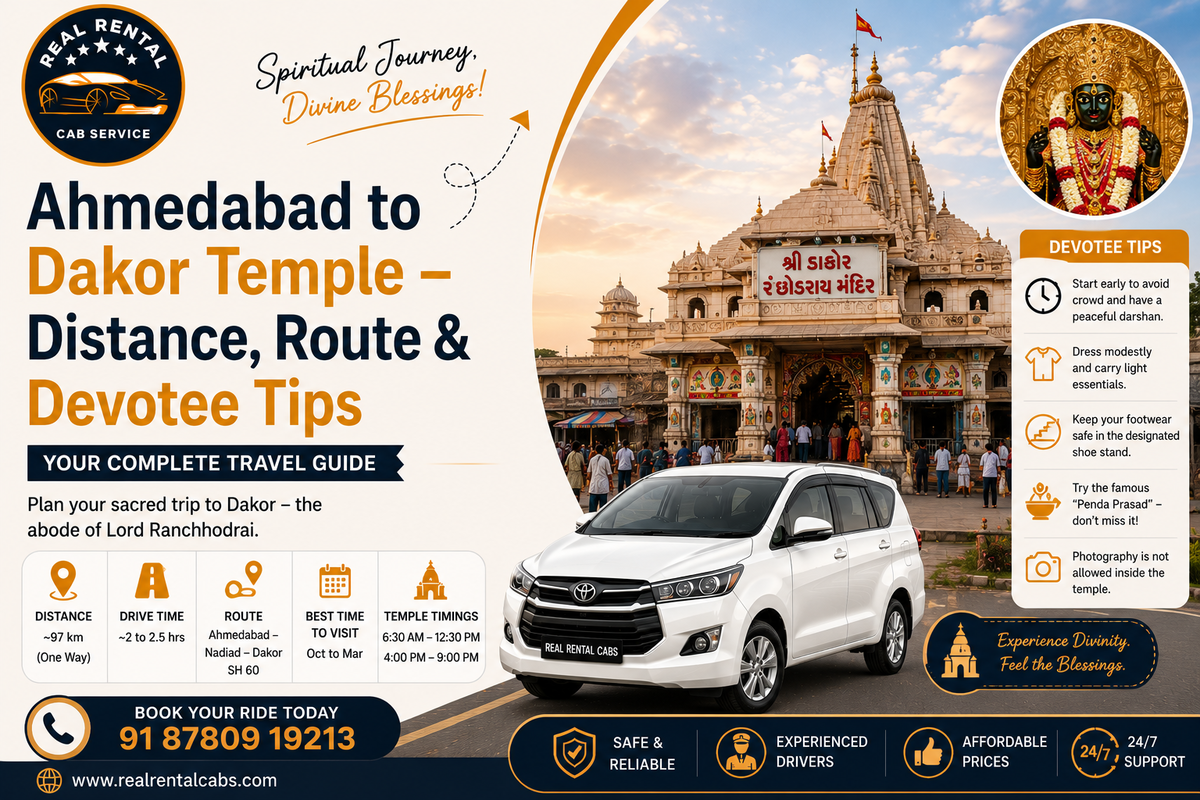
Gujarat has no shortage of important temples. Somnath, Ambaji, Dwarka, Pavagadh, the list is long and every site has its devoted following.
But Dakor holds a different kind of place in Gujarati devotional life.
It is not as grand as Dwarka. It does not have the dramatic hilltop setting of Pavagadh or the coastal atmosphere of Somnath. What Dakor has is something more intimate. A sense of personal devotion that feels almost domestic compared to the more monumental pilgrimages. Families come here regularly, not just once in a lifetime. People from villages across central Gujarat have been making the walk or drive to Dakor for generations to seek blessings from Ranchhodrai, the form of Lord Krishna worshipped here.
The main temple at Dakor is dedicated to Ranchhodrai, literally the one who left the battlefield, referring to a famous episode in Krishna's life when he chose to withdraw from a battle rather than sacrifice innocent lives. It is a name that carries significant meaning for devotees and gives Dakor its particular emotional character.
This guide covers everything you need for a proper visit, from the route and timings to the full story of what makes this temple significant and what else to see when you are there.
Distance and Route from Ahmedabad to Dakor
Dakor is located in Kheda district, approximately 100 to 110 km southeast of Ahmedabad, making it one of the closer significant pilgrimage sites from the city.
The main route goes via NH64 toward Anand and then south toward Dakor through Nadiad and Thasra. An alternative route goes via SH17 through Kheda district directly.
| Route Section | Distance | Road Quality |
|---|---|---|
| Ahmedabad to Nadiad | 60 km | NH64, good expressway section |
| Nadiad to Thasra | 25 km | State highway, decent |
| Thasra to Dakor | 20 km | State road, manageable |
| Total | 105 km approx | Good throughout |
How far is Dakor temple from Ahmedabad? Dakor Ranchhodrai temple is approximately 100 to 110 km from Ahmedabad via NH64 through Nadiad and Thasra, taking around 2 to 2.5 hours by road under normal traffic conditions.
The route via Anand and Nadiad is the most commonly used and most straightforward. The expressway section between Ahmedabad and Nadiad covers distance quickly. After Nadiad, state highways are narrower but in reasonable condition.
One thing worth knowing before you arrive: Dakor town is small and the roads near the main temple become quite narrow. Parking is available at designated areas a short walk from the temple. During Purnima days and major festivals, traffic management restricts vehicle movement significantly in the town centre.
For families booking transport, our outstation cab from Ahmedabad covers the Dakor route regularly. A driver familiar with the town layout knows where to park and how to navigate the congestion near the temple during busy periods.
The Story Behind Dakor and Ranchhodrai
Understanding why Dakor is significant requires knowing the story that defines the temple.
According to tradition, the original deity of Ranchhodrai at Dakor was brought from Dwarka by a devoted farmer named Bodana in the 14th century. The story goes that Bodana, an elderly devotee from Dakor, made the long pilgrimage to Dwarka every year on foot to seek darshan of Lord Krishna. When age made the journey impossible, he came to Dwarka one final time and prayed with such devotion that the deity of Ranchhodrai agreed to leave Dwarka and accompany him to Dakor.
The idol that came from Dwarka in this manner is the one worshipped at Dakor today. Whether understood literally or as devotional narrative, the story gives the temple its emotional core. Dakor is not a temple someone built and consecrated in the conventional sense. It is a place where a deity came because of one person's love.
This narrative explains why the Dakor temple feels different from more formally grand pilgrimage sites. Devotees here have a personal, almost conversational relationship with Ranchhodrai that the story of Bodana seems to have transmitted across generations.
Why is Dakor considered an important Krishna pilgrimage site? Dakor is significant because the primary deity Ranchhodrai is believed to be the same idol that was worshipped at Dwarka, brought to Dakor by a devoted farmer named Bodana in the 14th century. This makes Dakor one of the few temples outside Dwarka believed to house an idol of Krishna with direct connection to the original Dwarka temple tradition.
Ranchhodrai Temple – What to Expect During Darshan
The main Ranchhodrai temple sits near the Gomti lake at the centre of Dakor town. The current structure dates primarily from the 18th century with significant renovations in more recent decades. The temple exterior is white with decorative elements and a shikhara tower visible from much of the town.
The temple complex is well-organised compared to some busier pilgrimage sites. The darshan queue system is managed through corridors leading to the main sanctum. On regular weekdays the flow is smooth and darshan is completed without excessive waiting.
Inside the sanctum, the idol of Ranchhodrai is elaborately decorated with fresh flowers and new clothing every day. The deity is dressed differently across different days and festivals, and regular devotees often plan visits around specific shringar occasions when the decoration is particularly elaborate.
Dakor Temple Darshan Timings
| Session | Opening | Closing |
|---|---|---|
| Early morning Mangala aarti | 6:00 AM | 7:00 AM |
| Morning darshan | 7:00 AM | 12:00 PM |
| Afternoon closure | 12:00 PM | 4:00 PM |
| Evening darshan | 4:00 PM | 9:00 PM |
| Evening Shayan aarti | 9:00 PM | 9:30 PM |
What are the darshan timings at Dakor Ranchhodrai temple? Dakor temple is open for morning darshan from 7 AM to 12 PM and evening darshan from 4 PM to 9 PM on regular days. The early morning Mangala aarti begins at 6 AM and the evening Shayan aarti closes the day at 9:30 PM. Timings are extended during Janmashtami, Purnima, and other major festival dates.
The most significant aarti sessions are the morning Mangala aarti at 6 AM and the Rajbhog aarti at approximately 11:30 AM before the midday closure. For devotees who want the most complete darshan experience, planning arrival in time for one of these aarti sessions is worthwhile.
Purnima, the full moon day, is the most important monthly occasion at Dakor. Thousands of devotees arrive on Purnima from across Kheda, Anand, Vadodara, and Ahmedabad districts. Traffic approaches the town from multiple directions on Purnima days and the town centre becomes very congested from afternoon onward. If planning a Purnima visit, arrive before 9 AM.
Janmashtami at Dakor – The Biggest Festival of the Year
Janmashtami, the celebration of Krishna's birth, is the most significant festival at Dakor by a considerable margin.
The celebration at Dakor runs for several days around the main Janmashtami date, falling in August according to the Hindu calendar. The midnight hour of Krishna's birth is marked by elaborate ceremony in the main temple with the deity specially decorated for the occasion. The streets of Dakor fill with devotees through the night.
The scale of Janmashtami at Dakor draws visitors and pilgrims from across Gujarat and beyond. Managing a Janmashtami visit requires planning at the level of Navratri at Ambaji.
Accommodation within Dakor is very limited at the best of times and fully occupied weeks ahead of Janmashtami. Most visitors coming from Ahmedabad either make a night journey to arrive early on Janmashtami day or stay in Nadiad or Anand, both of which are within reasonable distance.
The roads from Ahmedabad toward Dakor on Janmashtami are heavily trafficked. The state government typically deploys additional traffic management but travel times increase significantly. Budget at least an extra hour and a half to two hours on top of normal journey time for the Janmashtami period.
What is Dakor famous for during Janmashtami? Dakor is one of the most important Janmashtami celebration centres in Gujarat. The midnight ceremony marking Krishna's birth at the Ranchhodrai temple draws enormous crowds and the festival atmosphere extends across the entire town with decorated streets, cultural programs, and continuous devotional activity through the night.
Gomti Lake – The Sacred Water Body at Dakor
The Gomti lake sits adjacent to the main Ranchhodrai temple and is an integral part of the Dakor pilgrimage experience.
The lake is considered sacred in the same way as the Gomti river at Dwarka, reinforcing the connection between Dakor and the original Dwarka tradition. Devotees perform parikrama, a circumambulation of the lake, as part of their pilgrimage at Dakor. The parikrama path circles the entire lake and takes approximately 20 to 30 minutes at a comfortable walking pace.
The ghats along the lakeside are well maintained and the lake itself, with the temple visible on one side, makes for a peaceful setting in the early morning or evening. On Purnima nights the reflection of the moon on the lake water and the sounds of aarti from the temple create an atmosphere that regular Dakor visitors describe as one of the most calming experiences the pilgrimage offers.
A morning parikrama of the Gomti lake before or after temple darshan is something most first-time visitors skip and almost every repeat visitor does. Include it in your plan.
Across the lake from the main temple, a smaller temple and several dharamshalas line the far bank. The view back toward the Ranchhodrai temple shikhara from the opposite side of the lake is the most widely photographed composition at Dakor.
Other Temples in Dakor Worth Visiting
The Ranchhodrai temple is the reason most people come to Dakor but the town has several other shrines that regular devotees include in their visit.
Dwarkadhish Temple: A smaller temple near the main complex dedicated to Lord Krishna in his Dwarkadhish form, reinforcing the connection to Dwarka tradition. A brief darshan here is included in most devotees' Dakor visit.
Shri Bhuvneshwari Mata Temple: A goddess temple near the Gomti lake visited by many pilgrims completing the full Dakor circuit. The temple is modest but active.
Hanuman Temple near the lake ghats: A straightforward Hanuman shrine on the parikrama path, visited as part of the lake circumambulation by most devotees.
Old Dakor town temples: The older sections of Dakor town contain several smaller neighbourhood temples, some dating to the 17th and 18th centuries, that give a sense of the town's long history as a pilgrimage centre. These are best explored on a leisurely walk through the older lanes rather than as scheduled stops.
None of these secondary sites require significant time individually but together they give the visit more depth than simply doing the main temple darshan and leaving.
Combining Dakor With Nearby Destinations
Dakor is well-positioned for combining with other destinations in central Gujarat given its location roughly halfway between Ahmedabad and Vadodara.
Vadodara: 75 km from Dakor. For families doing a day trip from Ahmedabad to Dakor, adding a Vadodara stop on the way back is a natural extension that adds Laxmi Vilas Palace and Sayaji Baug to the itinerary. This makes for a long day but a very full one.
Anand: 35 km from Dakor. The city famous for Amul dairy and the cooperative movement. The Amul dairy complex at Anand offers tours and is genuinely interesting for anyone curious about one of India's most significant agricultural cooperatives. A brief stop on the way to or from Dakor adds an unusual and informative element to the trip.
Champaner and Pavagadh: 90 km from Dakor via Vadodara. For a two-day itinerary from Ahmedabad, Day one can cover Dakor with a night stay in Vadodara, and Day two can cover Champaner and Pavagadh before returning to Ahmedabad. This circuit covers three significant destinations in two days without any one leg feeling rushed.
Statue of Unity: 120 km from Dakor via Vadodara. A longer extension but possible as part of a two to three day central Gujarat circuit.
For families doing any of these multi-destination combinations, our outstation cab from Ahmedabad handles custom multi-day routes through central Gujarat regularly. Having one vehicle and driver for the entire circuit removes the complexity of arranging transport between towns.
Where to Eat in Dakor
Dakor is a strictly vegetarian town given its status as a major Vaishnava pilgrimage centre. Non-vegetarian food is not available anywhere in the main temple area or town centre.
The town has numerous small restaurants and tiffin centres near the temple and lake area serving standard Gujarati vegetarian food including thali, poha, khichdi, and snacks. Quality is basic to decent across most establishments. Nothing exceptional but clean and filling.
Prasad from the Ranchhodrai temple is distributed during aarti sessions and is considered by devotees to be the most meaningful meal of the Dakor visit. The prasad typically includes dry sweets and is available in small quantities at the temple exit.
For families with specific dietary requirements beyond standard Gujarati vegetarian, the highway dhabas between Nadiad and Dakor offer broader options including South Indian snacks and North Indian fare.
Where to Stay Near Dakor
Dakor town itself has numerous dharamshalas managed by religious trusts offering very basic accommodation at low cost, primarily for pilgrims. Facilities are functional and clean but minimal. These suit devotees making a pure pilgrimage visit but may not work for families expecting standard hotel amenities.
The nearest towns with proper hotel accommodation are Nadiad, 45 km away, and Anand, 35 km from Dakor. Both have business hotels at reasonable prices that are significantly better than the dharamshalas in Dakor.
For most families from Ahmedabad, Dakor works well as a day trip without needing accommodation. A 7 AM departure from Ahmedabad reaches Dakor by 9:30 AM, allowing comfortable morning darshan, lake parikrama, and a return to Ahmedabad by early afternoon.
Practical Tips for Visiting Dakor
Purnima visits require arriving before 10 AM. The crowds build through the morning on Purnima days and by noon the town centre is congested enough to make movement between the temple, lake, and parking areas slow and uncomfortable.
The temple midday closure from 12 PM to 4 PM is strictly observed. Plan your visit timing to complete darshan before noon or arrive after 4 PM for the evening session.
Dress code expectations at Dakor are traditional. Men in dhoti or clean trousers and women in saree or salwar are most appropriate. The temple staff may request certain dress standards near the main sanctum, particularly during aarti times.
Mobile phones and cameras are not permitted inside the main sanctum of the Ranchhodrai temple. Photography outside in the compound and around the Gomti lake is unrestricted.
The Gomti lake parikrama path is straightforward but involves walking on paved and sometimes slightly uneven surfaces around the lake perimeter. Flat comfortable footwear is appropriate. The path is fully accessible to elderly visitors at a comfortable pace.
Dakor town has limited ATM access. Carry cash before leaving Ahmedabad as temple offerings, prasad purchases, and most shops near the temple are cash based.
If you are combining Dakor with an Ahmedabad airport taxi transfer at the start or end of a longer Gujarat trip, the proximity of Dakor to both the expressway and central Gujarat makes it a logical first or last stop before returning to Ahmedabad.
Frequently Asked Questions
What is the significance of Purnima at Dakor temple?
Purnima, the full moon day, is the most important monthly occasion at Dakor. The full moon holds special significance in the Krishna devotional tradition and thousands of pilgrims from across Kheda, Anand, and Vadodara districts arrive at Dakor on each Purnima for darshan and lake parikrama. The Purnima atmosphere at Dakor is considered by regular devotees to be the most complete experience the temple offers outside of major annual festivals.
Can I visit Dakor as a day trip from Ahmedabad?
Yes, Dakor is one of the most comfortable day trips from Ahmedabad given the 100 to 110 km distance and 2 to 2.5 hour drive. A 7 AM departure reaches Dakor by 9:30 AM, allowing morning darshan, lake parikrama, and time to explore the secondary temples before returning to Ahmedabad by early afternoon comfortably.
What should I bring as an offering to Ranchhodrai temple at Dakor?
Common offerings at Dakor Ranchhodrai temple include fresh flowers, particularly yellow and orange marigolds, tulsi leaves, coconut, and mishri. All offering materials are available from shops immediately outside the temple gate and there is no need to bring them from Ahmedabad.
Is Dakor temple suitable for elderly visitors?
Yes. The main Ranchhodrai temple is accessible without significant physical demands. The darshan corridor is level throughout and the Gomti lake parikrama is on flat ground. Elderly visitors comfortable with regular walking have no specific difficulties at Dakor compared to more demanding sites like Pavagadh.